
National system
National disease surveillance, built from the care facilities already deliver.
MOANA Surveillance turns routine clinical data into a national public health picture. Coded diagnoses, laboratory results and medicine use flow from facilities as they are recorded, are classified into syndromes and checked for duplicates, and appear as trends, maps and alerts for ministry teams.
Weekly or monthly paper returns arrive late, incomplete and difficult to verify.
For ministries of health and public health units.
What the ministry sees
The interface, as your teams will use it.
Every screen is the real Moana interface, shown with demonstration data.
Diagnosis codes mapped to surveillance syndromes.
What it does
Syndromes classified from coded diagnoses, and more.
Syndromic classification
Coded diagnoses are mapped to surveillance syndromes as they are recorded, not weeks later.
Laboratory surveillance
Test volumes, positive and critical results and turnaround times across every reporting lab.
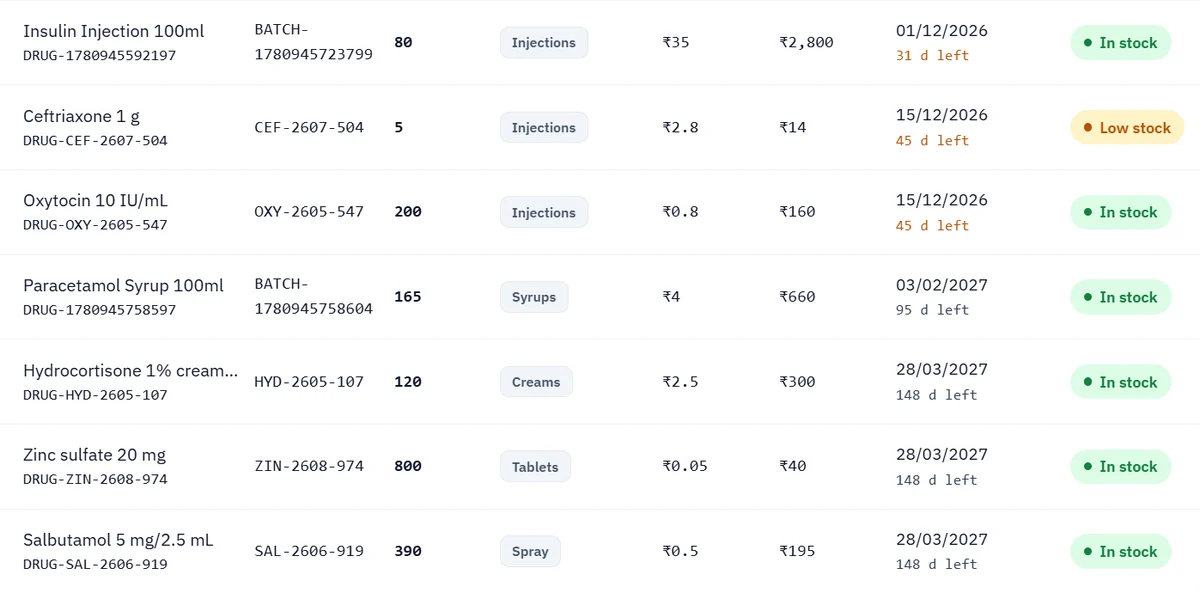
Pharmacy surveillance
Stock, expiry and dispensing patterns across the network, alongside the disease picture.
Patient flow and referrals
How patients move between facilities and levels of care, from presenting to discharge.
Reporting compliance
Which facilities are reporting, how fresh their data is, and where follow up is needed.
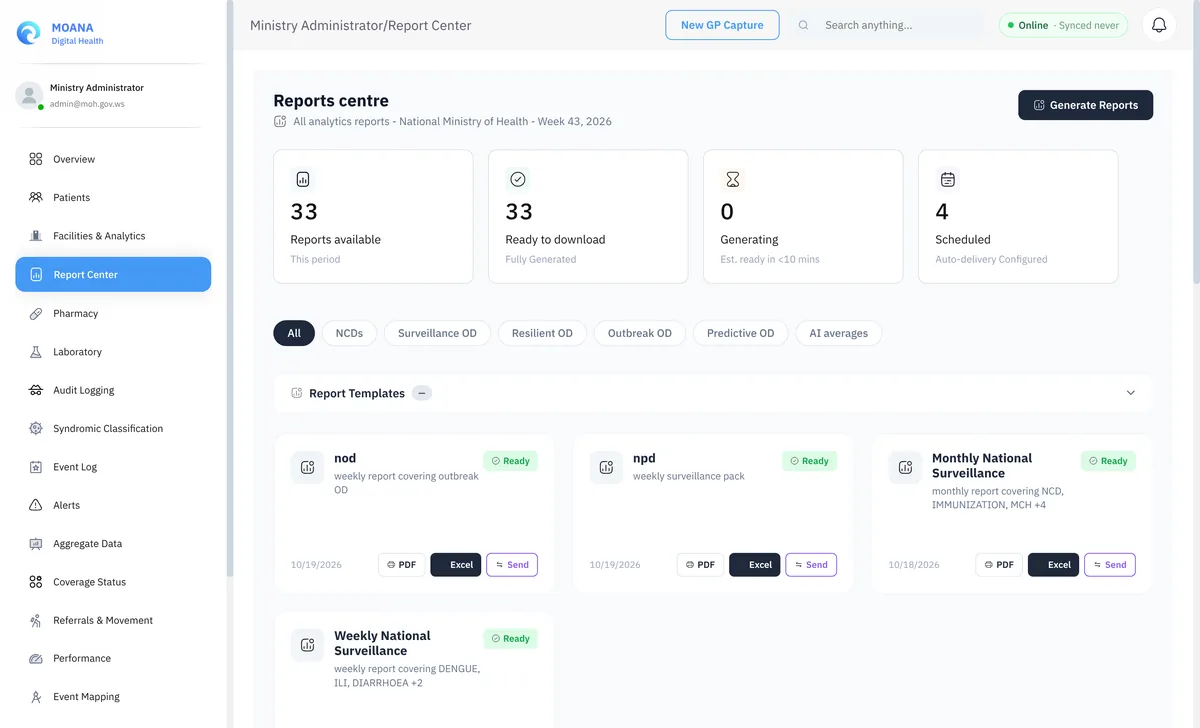
Reports and exports
Scheduled national reports, and aggregates exported as FHIR MeasureReport bundles.
Outbreak alerts and rules
Alert rules watch incoming cases and notify the right team when thresholds are crossed.
Disease mapping
Cases mapped across the health system, down to facility level.
AI risk scoring and narratives
Risk scores and plain language summaries of what changed, for the surveillance team to review.
20 modules in MOANA Surveillance, including:
- National Overview
- Disease Alerts and Rules
- Disease Mapping (GIS)
- Trends
- Syndromic Surveillance
- Health Programmes and Indicators
- Facility Reporting and Coverage
- Patient Surveillance
Overview
A national view built from routine care.
Traditional surveillance depends on weekly or monthly paper returns, which arrive late, incomplete and difficult to verify. By the time a signal is visible, an outbreak may already be established. MOANA Surveillance reads directly from the clinical record, so the national view is updated as care is delivered.
Diagnoses recorded in the EHR are mapped to surveillance syndromes as they are coded. Laboratory surveillance tracks test volumes, positivity, critical results and turnaround across every reporting laboratory. Pharmacy surveillance shows stock, expiry and dispensing patterns alongside the disease picture. Patient flow and referral analysis shows how people move between facilities and levels of care.
Alert rules watch incoming cases and notify the right team when thresholds are crossed, and disease mapping shows clusters down to facility level. Reporting compliance shows which facilities are reporting and how current their data is.
Duplicate patient matching protects national figures, AI generated narratives summarise what has changed for the surveillance team to review, and aggregates are exported as FHIR MeasureReport bundles and to DHIS2.
How it works
From a diagnosis to a national signal.
- Recorded at the facilityA clinician records a coded diagnosis, a laboratory releases a result or a pharmacy dispenses a medicine.
- Classified and checkedThe event is mapped to a syndrome and checked against the master patient index for duplicates.
- AggregatedCases are counted by place, time and programme indicator as they arrive.
- DetectedAlert rules and trends identify unusual activity and notify the responsible team.
- ReportedScheduled national reports and FHIR and DHIS2 exports are produced from the same data.
Data flow
Facility, district, national.
Facilities report through care, not through separate tally forms.
- FacilityRecorded in careCoded diagnoses, laboratory results and medicine use flow from facilities as they are recorded.
- District and provinceFollowed upReporting compliance shows which facilities are reporting, how fresh their data is, and where follow up is needed.
- NationalSeen and reportedTrends, maps and alerts for ministry teams, with scheduled national reports and FHIR and DHIS2 exports.
Outcomes
What changes for your organisation.
Earlier outbreak detection
Signals appear as cases are recorded rather than weeks later.
Trusted national figures
Coding, deduplication and reporting compliance improve data quality.
Less reporting burden
Facilities report through care, not through separate tally forms.
Integrated picture
Clinical, laboratory and pharmacy signals are seen together.
Standards and reporting
Coded and exchanged in open formats.
Aggregates are reported to DHIS2 and exported as FHIR MeasureReport bundles, and scheduled national reports are produced from the same data.
Standards
- FHIR R4
- ICD 10
- LOINC
- OpenHIE
- DHIS2
- FHIR MeasureReport
Part of the same platform
Deployment and governance
A national system the ministry controls.
A standalone national system
A national system in its own right, layered on the Moana platform and reading from the facilities connected to it.
The ministry owns its data
The government that collects the data owns it. Hosting is agreed with each client.
Duplicates kept out of national figures
Events are checked against the master patient index, and duplicate patient matching protects national figures.
AI reviewed by people
Risk scores and AI generated narratives are summaries for the surveillance team to review.
Related news
From the field and the blog.
-
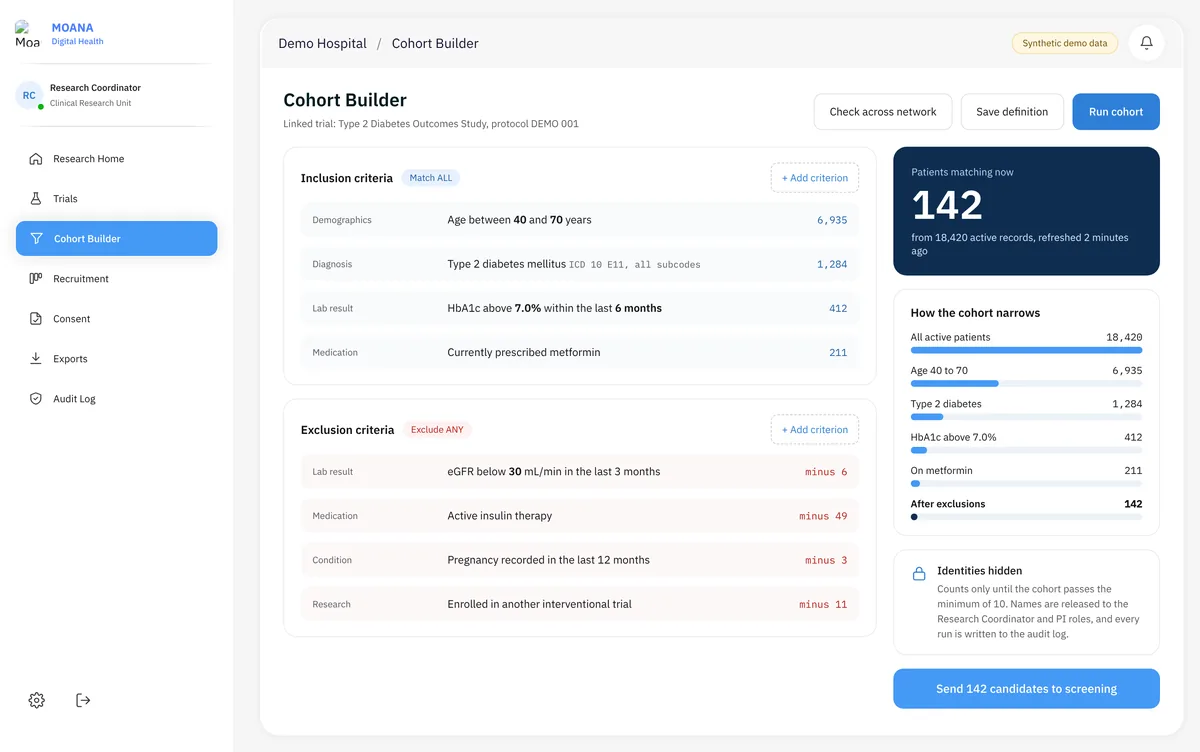
Moana launches Clinical Research
A new system on the Moana platform for finding eligible study participants without exposing who they are.
-
One platform, three national systems
Why surveillance, medical supply and clinical research sit on top of the record instead of beside it.
-
Introducing the Moana Medical Supply System
Stock, requisitions and deliveries visible from the national warehouse to the facility shelf.
Where does MOANA Surveillance get its data?
From routine care recorded in Moana: coded diagnoses, laboratory results and pharmacy activity, classified and checked as they arrive.
Can MOANA Surveillance report to DHIS2?
Yes. Aggregates are reported to DHIS2 and exported as FHIR MeasureReport bundles.
Is MOANA Surveillance a standalone system?
Yes. It is a national system in its own right, layered on the Moana platform and reading from the facilities connected to it.
See MOANA Surveillance with your own facilities.
We will walk your team through the platform using the departments and reports you work with every day.